
To provide you with various specifications of piston & plunger pumps products and services

In industries such as oil and gas, chemical processing, and refineries, the boiler feed pump is a critical power equipment whose selection directly affects the safety and efficiency of the production system. In actual engineering decisions, the specific process, pressure, and flow requirements must be taken into account.
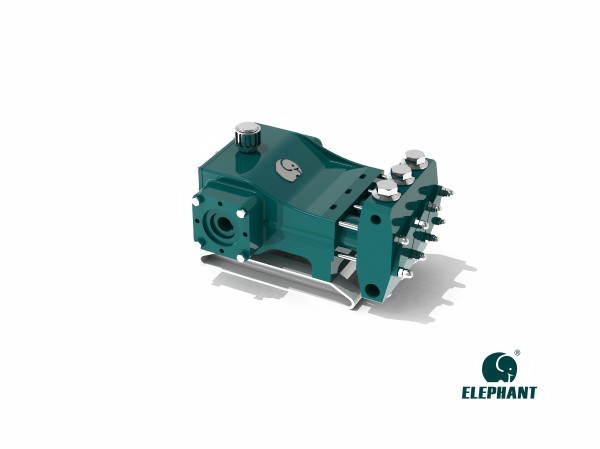
1. Characteristics of Boiler feed Pumps
Boiler feed pumps must operate stably over the long term under high-temperature and high pressure conditions. The feed is deaerated and heated, and the pump discharge pressure is extremely high. This places stringent requirements on the pressure resistance of the pump body material, the reliability of the sealing structure, and the thermal stability of the rotor components. Additionally, the precision of flow regulation and response speed are critical. As boiler load fluctuates with operating conditions, the feed pump must have good regulation performance to adapt to large flow variations, avoid cavitation and overheating under low-flow conditions, and ensure precise water level control.
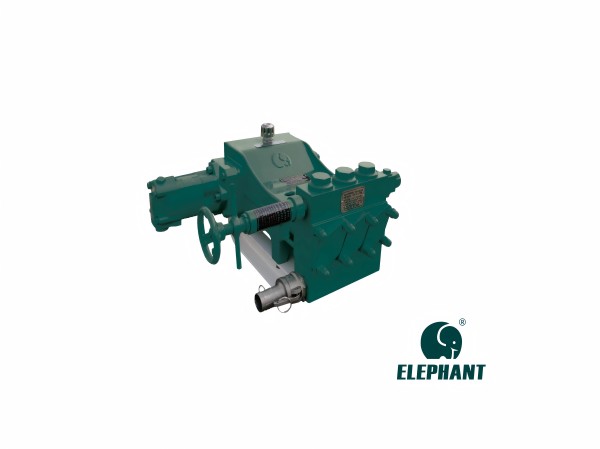
2. Reciprocating vs. Centrifugal
In boiler feed applications, centrifugal pumps compliant with API 610 are compact, high-flow, and smooth-running — making them the first choice for most medium-to-high pressure boilers and suitable for continuous production with stable loads. Reciprocating pumps compliant with API 674 have lower flow and some pulsation, but they can maintain high-efficiency operation under extremely high pressures and are insensitive to viscosity changes — making them suitable for ultra-high pressure, low-flow, or special operating conditions requiring precise metering.
| Reciprocating | Centrifugal | |
| Pump Type | Plunger, triplex, quintuplex | Multistage centrifugal |
| Working Principle | Relies on the reciprocating motion of plungers within the cylinder to change volume, thereby generating pressure energy. | Utilizes the centrifugal force generated by high-speed impeller rotation to convert mechanical energy into pressure energy and kinetic energy of the liquid. |
| Efficiency | >90% | 60%–75% |
| Performance | High volumetric efficiency, minimally affected by pressure — maintains high efficiency even under ultra-high pressure and low flow; strong medium adaptability, but with output pulsation. | Continuous and smooth output with no pulsation — efficiency decreases under low-flow and ultra-high pressure conditions; high sensitivity to media. |
| Applicable Conditions | Ultra-high pressure, low flow, media with significant viscosity variation, or special conditions requiring precise metering. | Continuous production with stable loads — the mainstream choice for medium-to-high pressure boiler feed. |
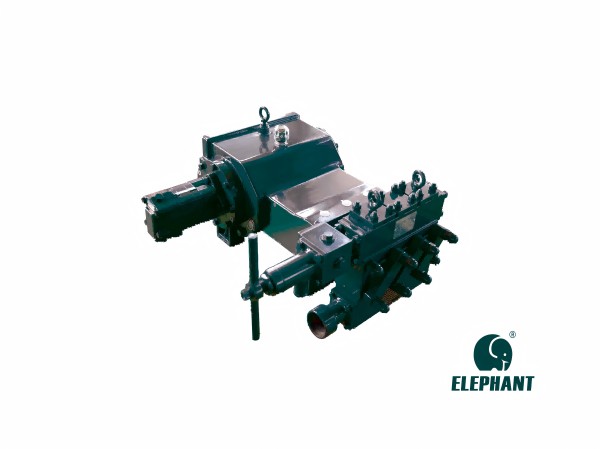
3. How to Select
Evaluate the appropriate boiler feed pump based on the project process: for ultra-high pressure, low flow, or special media conditions, an API 674 reciprocating pump can be selected; for conventional medium-to-high pressure, large-flow scenarios, an API 610 centrifugal pump is the choice. Next, consider operational adjustment flexibility: for frequent fluctuations and fast response requirements, a centrifugal pump with variable frequency drive offers better control precision and energy efficiency. Finally, make a comprehensive decision based on lifecycle cost (LCC).
When selecting a boiler feed pump, all of the above factors need to be comprehensively considered. Elephant Machinery's boiler feed pumps are manufactured strictly in accordance with API 674 standards — whether bare pumps or complete pump skids, customization is supported!

To provide you with various specifications of piston & plunger pumps products and services
Contact Us
If you are interested in our products, please contact us, we will provide you with suitable services.
 +86 18110351348
 Email: louise.zhang@c-elephant.com
 Address: Room 909, Building 4, No. 109 Software Avenue, Nanjing City, Jiangsu, China</br></br>No. 58 Guan Hua West Road, Jianhu County, Yancheng City, Jiangsu Province, China
Please read on, stay posted, subscribe. and we welcome you to tell us what you think.
We Will Never Share or Sell Your Email. We Also Promise Not to Flood Your Inbox.


 IPv6 network supported