
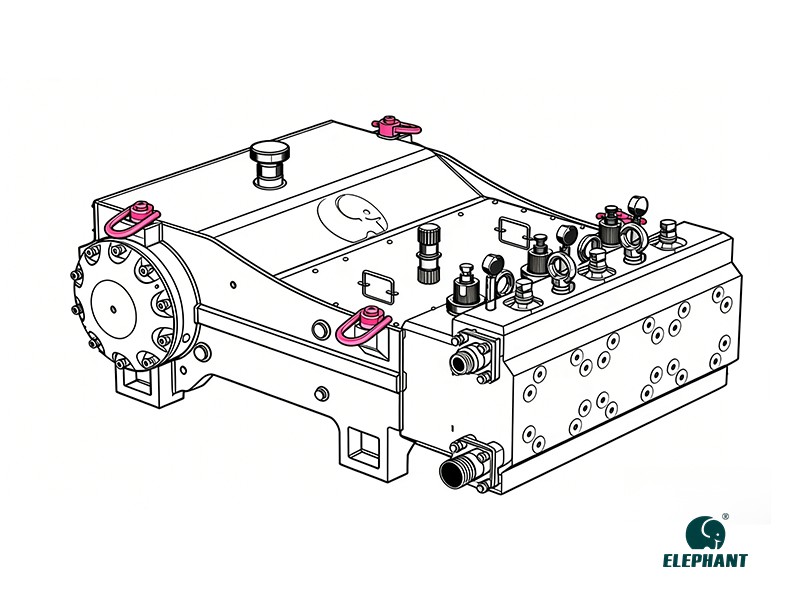
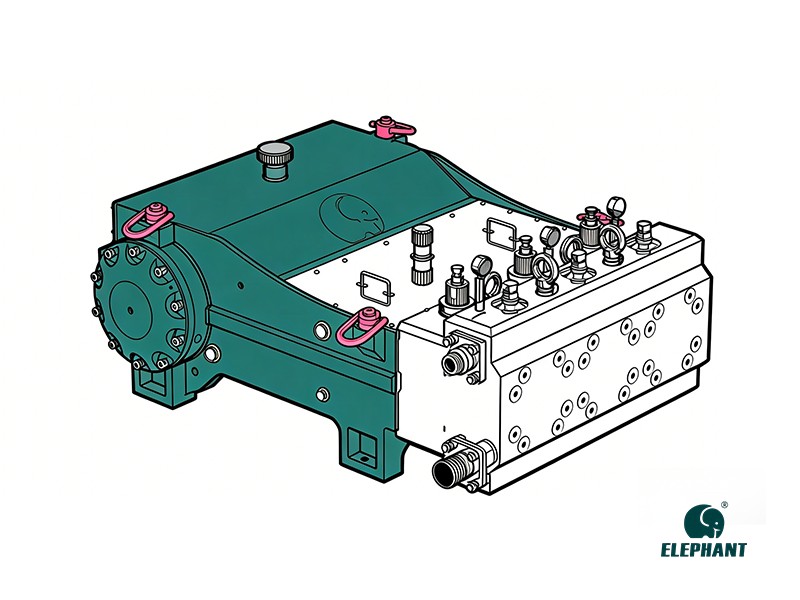
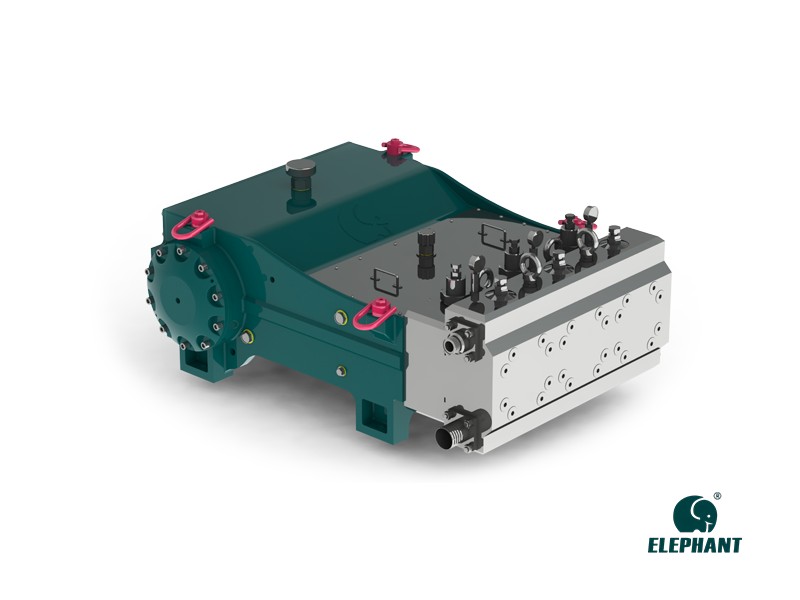



Model :
DGS150Type :
High Pressure Process Diaphragm PumpStroke :
130Cylinder Diameter :
70-110Flow :
16.6-41.1Pressure :
20.7-8.4Shipping Port :
Shanghai Port, ChinaWarranty :
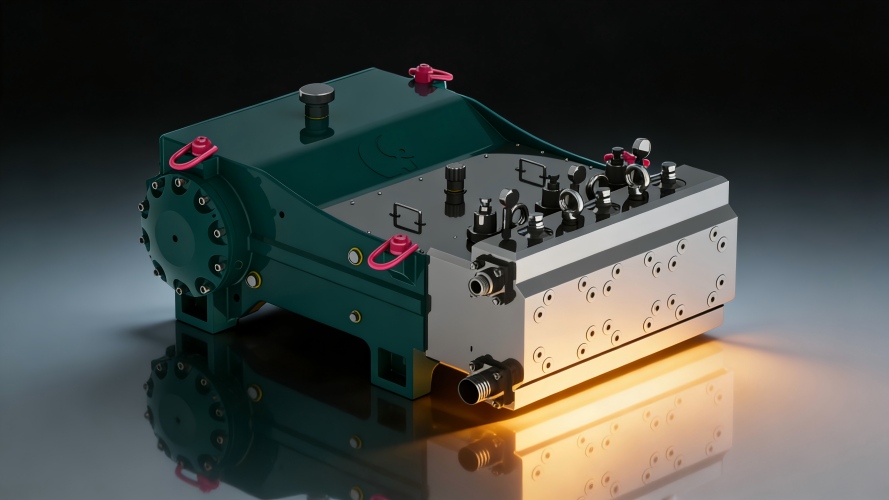
12 MonthsThe operating principle of the DGS150 high pressure process diaphragm pump involves completely isolating the mechanical motion of the drive end from the process medium at the discharge end. Using hydraulic oil as the intermediate transmission medium, the reciprocating motion of the piston or plunger is converted into elastic deformation of the diaphragm, which periodically changes the volume of the pump chamber to facilitate the suction and discharge of the medium.
Technical Specifications
Flow Range: ≤100 m³/h
Pressure Range: ≤120 MPa
| Model | Flow Rate ( m³/h ) | Pressure ( Mpa ) | Stroke ( mm ) | Cylinder Diameter ( mm ) | Stroke Rate ( r/min ) | Power ( KW ) |
| DGS150-16.6/20.7 | 16.6 | 20.7 | 130 | 70 | 185 | 110 |
| DGS150-27.5/12.5 | 27.5 | 12.5 | 130 | 90 | 185 | 110 |
| DGS150-41.1/8.4 | 41.1 | 8.4 | 130 | 110 | 185 | 110 |
Advantages
1. Absolute sealing: Due to the presence of the diaphragm, the conveyed medium is completely isolated from the lubrication system and drive mechanism. This makes it suitable for the conveyance of toxic, flammable, explosive, highly corrosive, or high-purity media, with a leakage risk approaching zero;
2. High pressure adaptability: By optimizing diaphragm materials, hydraulic control strategies, and pump head structural strength, it can meet the demands of extreme operating conditions;
3. Flexible flow regulation: By adjusting the drive speed, stroke length, or using variable frequency control, flow can be precisely adjusted over a wide range. Additionally, the flow-pressure relationship is highly linear, facilitating automated process control.
Function
1. Reliably conveys and accurately meters corrosive, highly toxic, particulate-laden, or high-viscosity media under high-pressure conditions.
2. Compared to conventional centrifugal or gear pumps, it uses a flexible diaphragm that expands and contracts to create changes in the working chamber volume, thereby isolating the conveyed medium from the drive mechanism and eliminating the risk of dynamic seal leakage, making it indispensable in chemical processes.
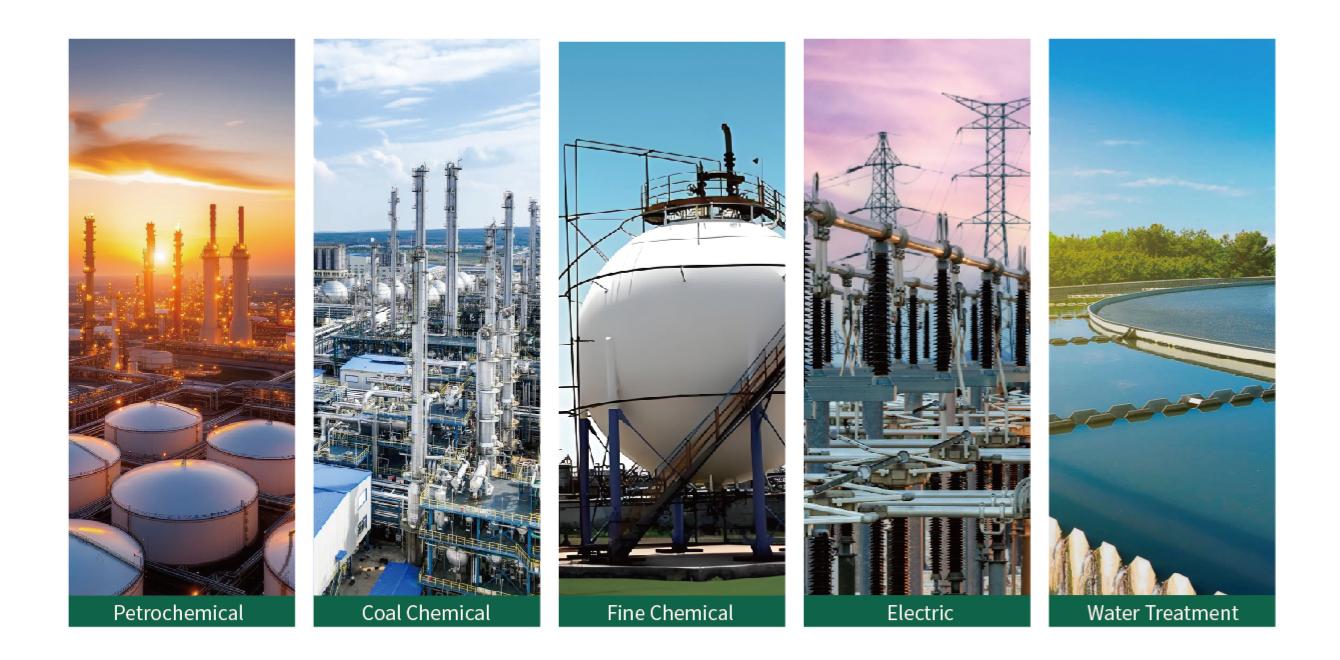
Applications
Product Rendering
Key Technical Considerations for Selection, Operation, and Maintenance
During the selection phase, comprehensively evaluate the chemical properties, temperature, solid content, and pressure-flow conditions of the medium to appropriately determine the diaphragm material, pump head material, and hydraulic system type. For media containing particles, install an inlet filter or use special valve types to prevent valve assembly wear and sticking. During operation, close attention must be paid to monitoring hydraulic oil cleanliness and oil level, as contamination or insufficient oil can cause abnormal stress on the diaphragm and shorten its service life. At the same time, a diaphragm condition monitoring mechanism should be established to enable predictive replacement of the diaphragm by detecting hydraulic oil leakage, pump head vibration, or acoustic characteristics, thereby avoiding downtime losses. Additionally, the installation and regular calibration of safety accessories, such as high pressure safety valves and diaphragm rupture alarms, are essential for ensuring the intrinsically safe operation of high pressure diaphragm pumps.
By adding a diaphragm chamber to the reciprocating positive displacement pump, a large-sized diaphragm separates the pump's fluid end from the power end. This design achieves high flow rates, high working pressures, and minimal pulsation, enabling leak-free transportation of flammable, explosive, toxic, and hazardous liquids. The product complies with Chinese National Standard GB/T9234-2018, Mechanical Industry Standard JB/T8697-2014, and international API674 standard.
Learn More
The DGS100 horizontal triplex reciprocating single-acting diaphragm pump features a horizontal triplex reciprocating design. It reliably conveys fluids via a single-acting diaphragm, effectively isolating the power end from the fluid end to ensure zero leakage of the conveyed medium.
Learn More
The DGS150 high pressure process diaphragm pump is a positive displacement pump that uses hydraulic power to drive the diaphragm in a reciprocating motion for fluid transfer. It operates at significantly higher pressures than conventional diaphragm pumps and is specifically designed for precise metering and reliable delivery in high pressure applications.
Learn More
To provide you with various specifications of piston & plunger pumps products and services
Contact Us
If you are interested in our products, please contact us, we will provide you with suitable services.
 +86 18110351348
 Email: louise.zhang@c-elephant.com
 Address: Room 909, Building 4, No. 109 Software Avenue, Nanjing City, Jiangsu, China</br></br>No. 58 Guan Hua West Road, Jianhu County, Yancheng City, Jiangsu Province, China
Please read on, stay posted, subscribe. and we welcome you to tell us what you think.
We Will Never Share or Sell Your Email. We Also Promise Not to Flood Your Inbox.



 IPv6 network supported